January 16, 2026
I tested 7 sites for building land for sale
Introduction
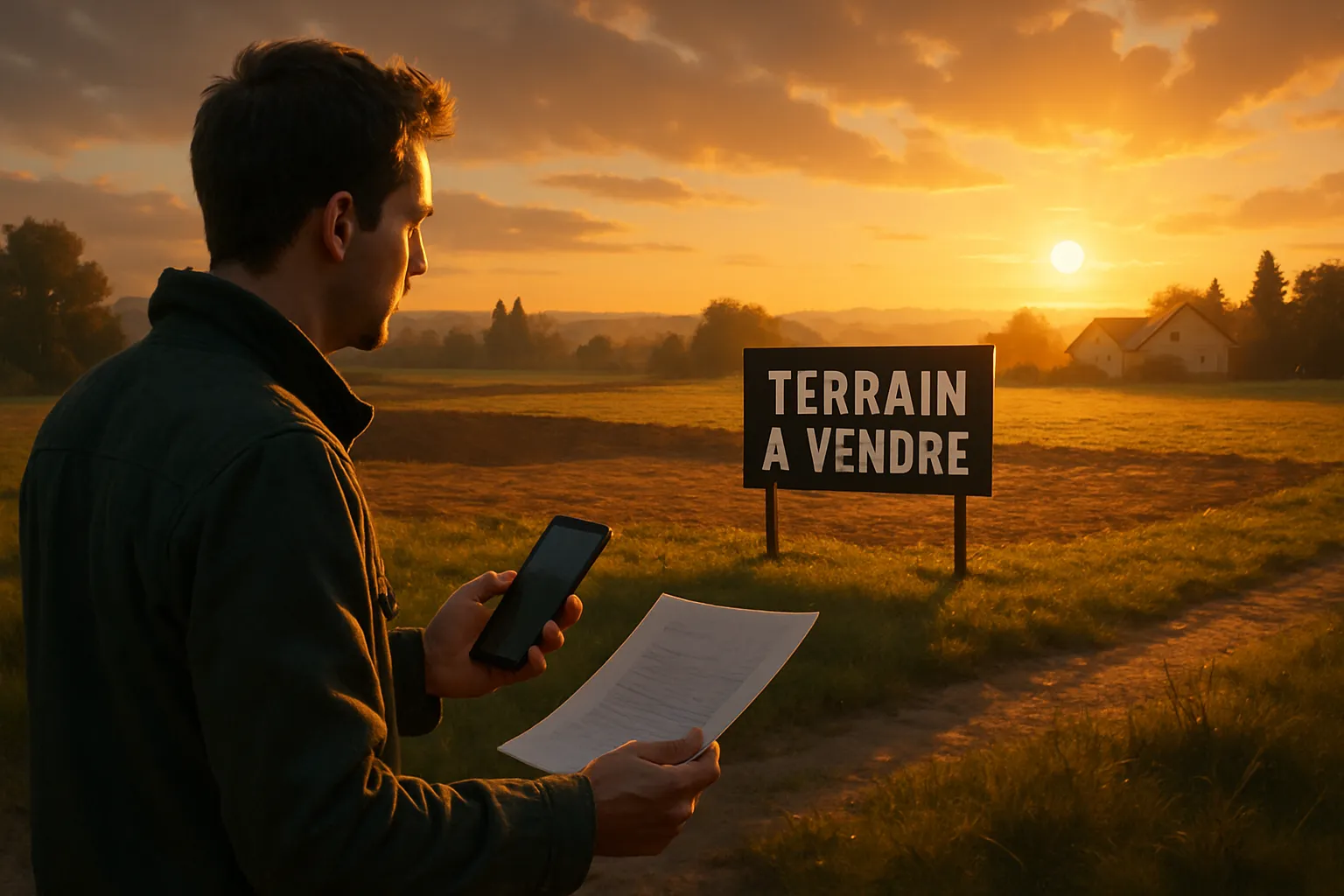
When I started my construction project a few months ago, I quickly realised that a single site wasn't enough to find reliable building land for sale. Between outdated ads, incomplete descriptions, and poorly covered geographical areas, I decided to personally test seven popular platforms. My goal? To understand which one offered the best compromise between the quantity of ads, the quality of information, and ease of use.
At the same time, I discovered Soléa Realty, a Mauritian agency that is 100% free for the client. Their transparency, end-to-end support, and local expertise inspired me: this is the kind of service I would have liked to find in France for my project, especially remotely.
In this article, I share my results, concrete tips, and a detailed comparison of the seven sites tested. The idea? To help you maximise your chances of finding that “rare gem” without wasting time.
Why cross-reference multiple sources for building land for sale
- Outdated or incomplete ads: some land that has been sold remains online for weeks.
- Variable geographical coverage: a site might be rich in Île-de-France, but almost empty in the countryside.
- Maximise opportunities: the more sources you consult, the more you increase your chances of finding land that meets your criteria.
By cross-referencing multiple platforms, you avoid missing out on a good deal and reduce the risk of unpleasant surprises during a visit.
7 sites tested and compared step by step
1. Les-Terrains.com
With over 53,000 specialised ads, Les-Terrains.com is a must-have. I particularly appreciated the precise geolocation and the ability to add urban planning filters (PLU zoning, easements).
- Advantages: completely free, technical details (GPS coordinates, easements, full description).
- Limitations: outdated ergonomics, sometimes slow navigation.
- Tip: save your searches on the interactive map to quickly identify high-potential areas.
2. Achat-Terrain.com
With over 200,000 ads, Achat-Terrain.com offers a wide choice and partnerships for “turnkey” projects. The interface is modern, and alerts are reliable.
- Advantages: intuitive interface, personalised email alerts.
- Limitations: limited urban planning information (no online PLU).
- Tip: once you've spotted a piece of land, download the PLU from the town hall before scheduling a visit.
3. Terrain-Construction.com
This platform is ideal for all budgets, from the tightest to premium projects. Integrated plans and photos make selection more visual.
- Advantages: advanced filters (area, budget, utility connections), site plans, and photo galleries.
- Limitations: uneven coverage depending on the region, sometimes fewer ads in rural areas.
- Tip: use the “serviced land” filter to quickly estimate the overall cost of your project.
4. Terrains.fr
Terrains.fr offers a breakdown by department and expert articles to guide first-time buyers.
- Advantages: integrated educational advice, effective email alerts.
- Limitations: sometimes limited number of ads outside major conurbations.
- Tip: read the “beginner mistakes” articles to avoid legal and technical pitfalls.
5. SeLoger.com (land section)
The giant SeLoger offers over 61,000 land listings. To explore the offerings on this platform, I recommend checking the SeLoger building land section, where the “serviced / unserviced” filters and the interactive 2D map were particularly useful to me.
- Strengths: sorting by region, precise filters on utility connections.
- Tip: set up a geolocated alert for your exact perimeter to be notified as soon as a new plot of land is published.
6. Bien’ici.com
Bien’ici continues to grow with an immersive 3D map and over 55,000 plots of land available.
- Strengths: relief visualisation, automatic calculation of distances to services (school, shops, transport).
- Tip: use the 3D view to assess the land's orientation (sunlight) and natural slope.
7. Leboncoin
It's impossible to ignore the massive volume of ads on Leboncoin, often published by owners.
- Strengths: often more competitive prices, direct seller contact.
- Limitations: rare technical information, urban planning procedures to be rigorously checked.
- Tip: systematically request the PLU and an urban planning certificate before any visit.
Tip 1: Refine your search with PLU filters and the interactive map
To avoid unpleasant surprises, consult the Local Urban Plan (PLU) online on the Geoportail de l'Urbanisme. Identify the U (urbanised) and AU (to be urbanised) zones, then return to your favourite platforms, filtering by postcode or GPS coordinates.
- Go to geoportail-urbanisme.gouv.fr and locate your parcel.
- Export the zoning boundaries and import them into your mapping tool.
- Combine this data with your alerts so you don't miss a plot of land served by public roads and networks.
Tip 2: Check buildability and utility connections before any offer
Obtaining an operational urban planning certificate is essential to secure your purchase: to learn more about the process, consult the operational urban planning certificate guide.
- Urban planning certificate: free, to be requested from the town hall, 2-month delay.
- Utility connection checklist: water, electricity, sanitation, telecoms.
- Site visit: locate electricity poles, fire hydrants, and compare with neighbouring plots.
To find out all the administrative checks to carry out before purchasing, this article guides you step by step.
Tip 3: Compare average prices per m² by region
The differences are enormous: by creating a small table, I was able to negotiate more effectively. To quickly identify the average land prices in your region, this online resource is very useful.
| Region | Average price (€/m²) |
|---|---|
| Paris (intra-muros) | €5,500 |
| Creuse | €30 |
| Gironde | €180 |
Interpret these differences: a plot of land at €50/m² in an AU zone can be worth €100–200/m² in a U zone. Use these benchmarks to justify your offer to the seller.
Tip 4: Set up highly effective monitoring
Beyond native alerts, I automated my search:
- Email: group all your alerts in a dedicated folder.
- RSS Feed: add the RSS feeds of your advanced searches to your reader.
- Google Alerts + Zapier: generate a Slack or SMS notification as soon as a new URL containing “building land” appears.
Tip 5: Anticipate additional costs and negotiate with finesse
Don't overlook costs beyond the land price:
- Notary fees: 7–8% of the price (registration fees, emoluments, disbursements); for a complete overview, consult the guide to notary fees when purchasing land.
- Boundary demarcation: €1,000–€1,500 by a chartered surveyor.
- Utility connection: 10 to 20% of the land price depending on the distance from networks.
Negotiation tactic: use the actual connection costs to ask the seller for a 5% to 10% discount.
Bonus: What if you considered an overseas project?
I wanted to test another market: Mauritius. That's where I met Soléa Realty, a Mauritian agency that is 100% free for the client. Their local team supports you from land search to key handover, thanks to a network of selected partners:
- Scouting and visiting land (on- and off-market).
- Soil studies, administrative procedures, and building permits.
- Custom design with architects and construction monitoring.
Client case: the Durand family, expats in Europe, found a turnkey villa in less than 4 months, with no hidden fees.
Conclusion and final checklist
To summarise:
- 7 platforms compared: Les-Terrains.com, Achat-Terrain.com, Terrain-Construction.com, Terrains.fr, SeLoger.com, Bien’ici.com, Leboncoin.
- 5 practical tips: PLU filters, urban planning certificate, price comparison, automated monitoring, anticipation of costs.
Download our free PDF checklist to ensure you don't forget anything during your search.
Are you considering a project in Mauritius or need personalised support? Contact Soléa Realty today, or subscribe to our newsletter to receive more tips and comparisons.