March 12, 2026
Living walls: real estate added value
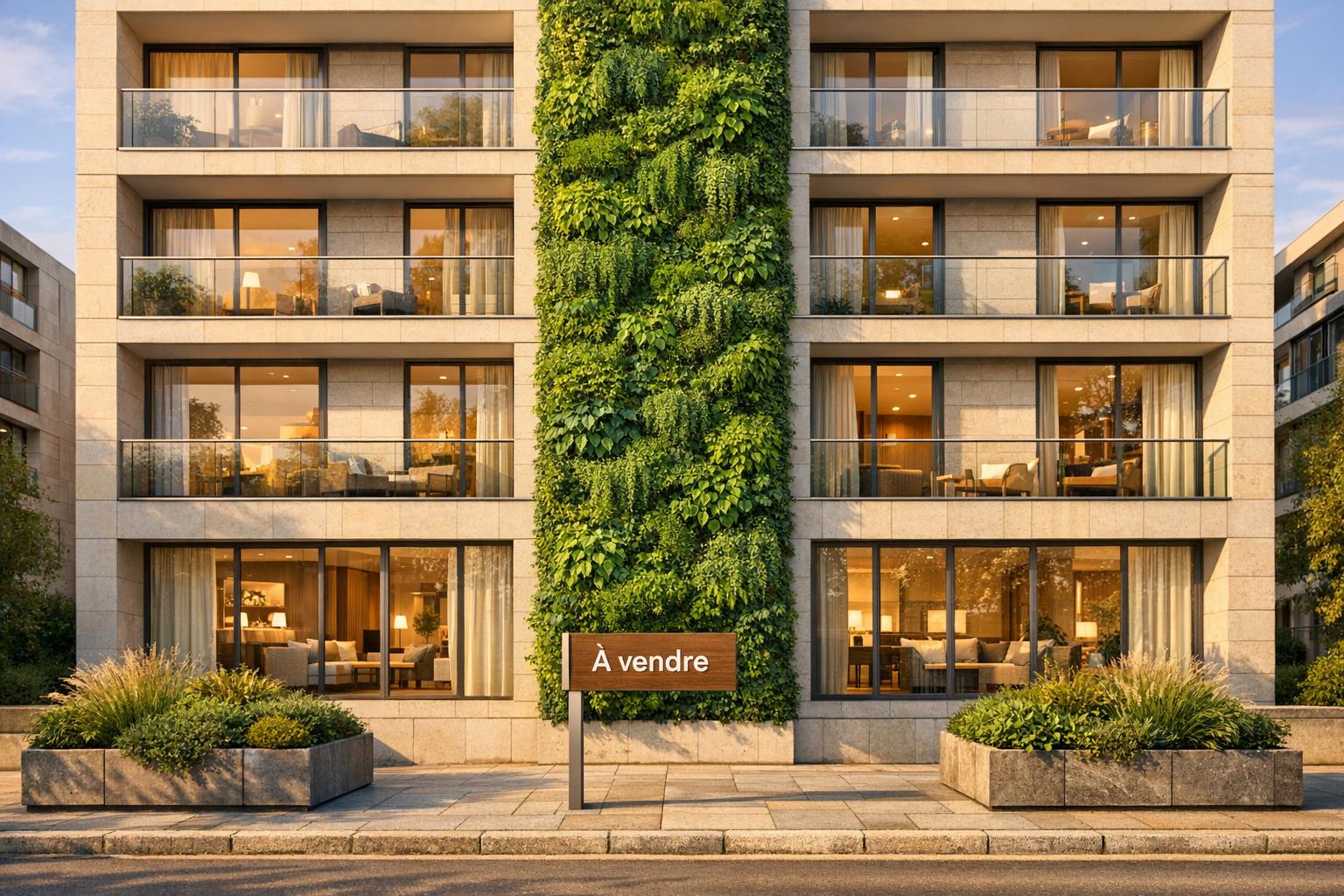
Living walls are transforming high-end real estate in Mauritius. More than just an aesthetic choice, they increase property values by up to 30%, reduce air conditioning costs by 60%, and offer thermal comfort by lowering facade temperatures by 10°C. These installations appeal to buyers who appreciate greenery and a more environmentally friendly lifestyle.
Key points:
- Property valuation: A living balcony or wall can add between MUR 5.2M and MUR 7.8M to a villa valued at MUR 26M.
- Energy efficiency: Natural thermal insulation, reduced need for air conditioning.
- Growing demand: 8 out of 10 buyers prioritise green spaces.
- Maintenance: High initial cost (from Rs 22,500/m²) and regular upkeep required.
Properties incorporating these solutions attract more interest, sell faster, and limit price negotiations. However, they require rigorous maintenance and a significant initial investment. In Mauritius, these living walls embody a new vision of luxury, combining aesthetics and performance.
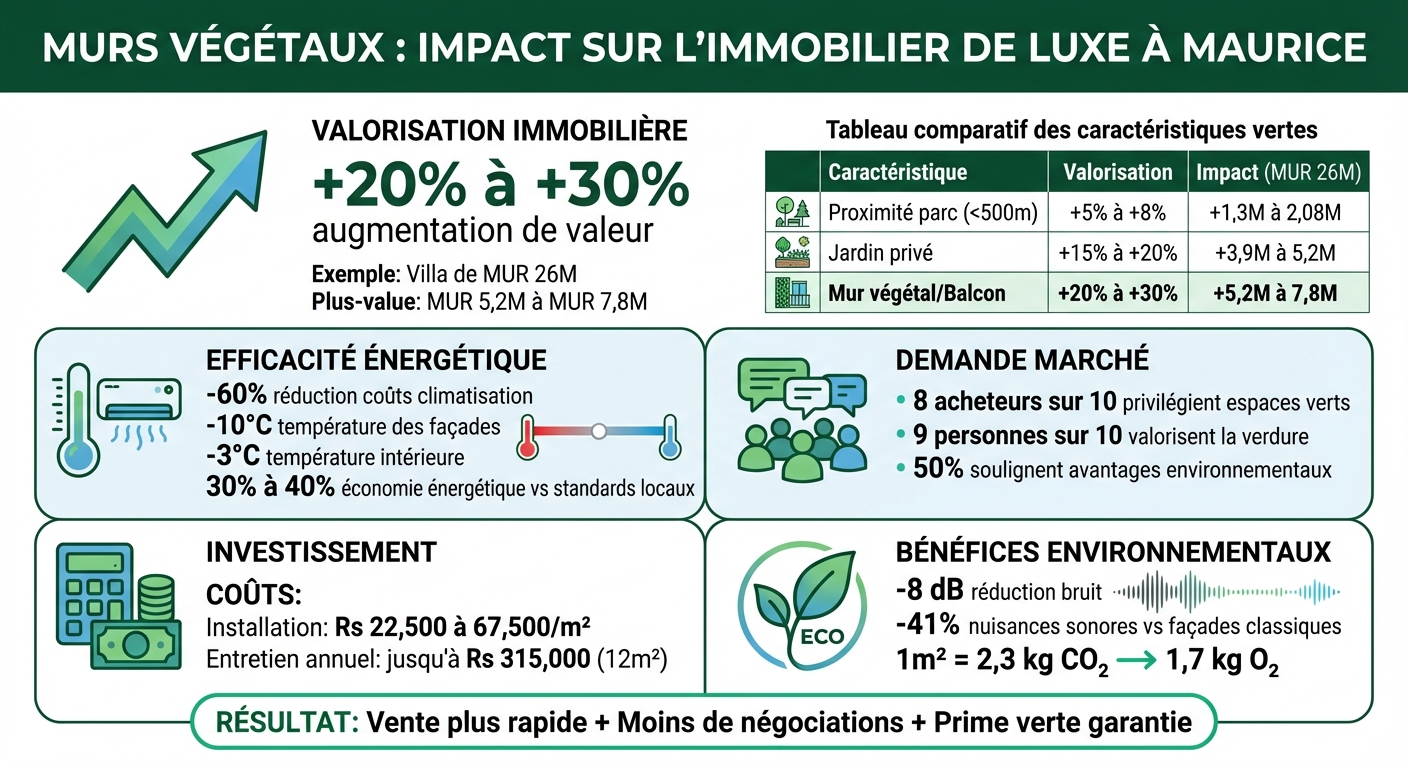
Living walls: impact on property value in Mauritius
Living walls: A superb decoration! #LMF5
sbb-itb-3115173
How do vertical gardens influence property value?
The figures speak for themselves: a vegetated balcony or terrace can increase a property's value by 20% to 30%. Take the example of a high-end villa valued at MUR 26 million. Such an increase translates into a capital gain of between MUR 5.2 million and MUR 7.8 million. In urban areas where greenery is scarce, this "green premium" can reach new heights, especially for exceptional properties.
This increase in value is not just based on numbers, but on very real buyer expectations. Today, buyers are no longer satisfied with just a prestigious address; they are looking for a living environment that combines comfort and well-being. It is no surprise that 8 out of 10 buyers consider the proximity of green spaces as a key criterion when purchasing a property. Living walls, in particular, offer a winning combination: in addition to improving thermal and energy insulation, they contribute to better indoor air quality. These functional advantages, combined with strong aesthetic appeal, fully justify the increase in property value.
Here is a table illustrating how different "green" features influence a property valued at MUR 26 million:
| Green feature | Estimated valuation | Impact on a MUR 26M property |
|---|---|---|
| Proximity to a park (< 500 m) | +5% to +8% | +MUR 1.3M to MUR 2.08M |
| Private garden | +15% to +20% | +MUR 3.9M to MUR 5.2M |
| Vegetated balcony/Living wall | +20% to +30% | +MUR 5.2M to MUR 7.8M |
This data comes to life during property viewings. Living walls often create a "love at first sight" effect, which not only shortens the sales period but also limits negotiation margins on the price. Beyond the financial aspect, the emotional impact on buyers is undeniable. A striking example: the Crown Prince of Dubai recently integrated Vertiss living walls into his luxury villas, thus enhancing their visual appeal and overall value.
At Soléa Realty, we observe that this trend is part of a desire to innovate and enhance the living environment. It reflects a growing demand for properties that combine elegance with environmental respect, meeting the expectations of a clientele seeking exclusivity and refinement.
1. Properties with living walls
Market value
Properties equipped with living walls stand out strongly in the Mauritian real estate market. Take the example of a 3-bedroom bioclimatic villa located in Baie du Cap, with a vegetated roof and a tropical garden, offered at €1,032,000. Another striking example is a 190 m² penthouse in the Verdant Garden project in Moka, surrounded by lush vegetation, listed at approximately €643,670 (around MUR 34,500,000). These properties clearly illustrate their high-end positioning. In addition to their impact on value, these residences offer improved thermal comfort.
Energy efficiency
Living walls provide natural thermal insulation that makes all the difference. In Mauritius, bioclimatic villas with vegetated roofs maintain an indoor temperature approximately 3°C lower than the outside. This reduction in air conditioning needs helps limit energy consumption, while protecting facades from solar radiation and bad weather. These characteristics extend the durability of structures while providing a more pleasant indoor environment.
Eco-luxury appeal
According to Vertiss: "Living walls... embellish spaces with a stylish and sophisticated natural green covering."
Even influential figures, such as the Crown Prince of Dubai, are adopting living walls in their luxury residences, reinforcing the idea of modern and refined aesthetics. In Mauritius, initiatives like Verdant Garden capitalise on this trend by offering spaces combining elegant architecture and sustainable living. These projects attract a clientele seeking a balance between luxury and ecological responsibility.
Sustainable benefits
While 9 out of 10 people recognise the importance of greenery in their daily lives, 50% highlight its environmental benefits. This awareness is reflected in Mauritius' Smart Cities, where initiatives such as solar panels, advanced sanitation systems, and communal green spaces are taking centre stage. These properties not only offer a pleasant living environment, but also embody an aspiration for a more sustainable lifestyle, while respecting high standards of luxury. This meets a growing demand for solutions that combine comfort, aesthetics, and responsibility.
2. Properties without living walls
The absence of living walls or green roofs can have significant repercussions on property values and their energy performance.
Market value
Properties without living walls or green roofs are often considered "energy sieves," which reduces their value in the real estate market, whether for sale or rental. Between 2025 and 2026 in Mauritius, high-end buyers are increasingly favouring eco-friendly homes with optimal energy performance. Consequently, properties without these ecological features experience a drop in demand, particularly among international luxury segment clients. Delphine Gibert Avitan, Director of Propriétés Parisiennes Sotheby's International Realty, explains:
« Demand for outdoor spaces as well as for eco-efficient housing is clearly increasing ».
This loss of value is directly linked to energy performance below modern expectations, as detailed below.
Energy efficiency
Without living walls, buildings are more exposed to thermal transfers, which increases air conditioning consumption and exacerbates the urban heat island effect. In a tropical climate like Mauritius, the absence of this natural protection leads to increased reliance on mechanical cooling systems. For example, BREEAM certified buildings can reduce their energy consumption by 30% to 40% compared to local standards. This difference in energy performance limits the appeal of properties to high-end buyers.
Eco-luxury appeal
Properties without ecological features struggle to meet the expectations of the "eco-luxury" segment, which has become a key criterion in popular regions such as Tamarin and Grand Baie. Unlike properties with living walls, which often create a "love at first sight" effect, these properties can seem bland or lacking in character. As Westimmo indicates:
« Eco-responsible properties not only attract environmentally conscious residents, but also increase their market value due to their durability and reduced energy costs ».
In 2025, sustainability is no longer a mere luxury, but an essential requirement for real estate in Mauritius.
Sustainable benefits
The absence of vegetation not only translates into higher energy costs. It also deprives owners of financial benefits, such as subsidies for installing solar panels, rainwater harvesting systems, and the use of ecological materials. These buildings also lack natural thermal insulation and passive cooling, essential for the tropical Mauritian climate. With Mauritius' national goal of producing 60% of its energy from renewable sources by 2030, traditional properties risk becoming obsolete if they do not adapt to new standards.
Advantages and Disadvantages
The installation of living walls can transform a luxury property, but it comes with compromises that need to be carefully weighed.
Financially, these installations offer interesting advantages. Vegetated properties benefit from a "green premium" of 20% to 30% for outdoor spaces such as fitted terraces and balconies. In terms of energy savings, they reduce air conditioning consumption by 33% to 60%. However, the initial cost is high, ranging between Rs 22,500 and Rs 67,500 per square meter, with annual maintenance costs potentially reaching Rs 315,000 for a 12 m² surface. Conversely, traditional properties do not have these costs, but they depend on mechanical systems for cooling.
The ecological aspect is a major asset. 8 out of 10 buyers consider the proximity of green spaces as a key criterion when purchasing a property. Living walls also reduce noise by 8 dB and absorb 41% more noise pollution than classic facades. As Eve B., journalist for Maison 20 Minutes, points out:
« This dose of emotion justifies an additional financial effort in the eyes of buyers, often without discussion ».
However, these installations require constant maintenance. Automated irrigation systems must be monitored regularly, and certain plants, such as ivy, can damage the structures of old buildings. Furthermore, local regulations, such as those of the PLU, can limit possibilities, especially in co-ownerships where general assembly agreement is essential. Properties without living walls avoid these constraints, but they offer less ecological and energy value.
Despite increased water consumption, 1 m² of vertical garden transforms 2.3 kg of CO₂ into 1.7 kg of oxygen and protects facades against UV and bad weather, thus extending their lifespan. Unlike conventional constructions, these walls enrich urban biodiversity and purify local air. In short, although these installations increase the attractiveness and performance of a property, they require additional investment and management that any buyer or investor must carefully anticipate.
Conclusion
Living walls are not just decorative elements. They provide significant added value, increasing the price of luxury real estate by 20% to 30%, while reducing air conditioning costs by up to 60%. These characteristics make them a strategic option for owners and investors in Mauritius.
To maximise these benefits, it is advisable to favour their installation on sun-exposed facades, with an automated and remotely controlled irrigation system. In high-end apartments, stabilised living walls offer a natural and elegant aesthetic while limiting maintenance constraints. Soléa Realty, in collaboration with experts, supports its clients from the first stages of the project, selecting adapted endemic species. This approach reduces maintenance needs while increasing the property's value.
In a context where 9 out of 10 buyers consider the proximity of green spaces essential, living walls transform an ordinary property into an exceptional space. They particularly appeal to environmentally conscious buyers, while offering concrete benefits: better protection against climatic conditions, reduced noise pollution, and the creation of a calming space.
Thanks to personalised support, Soléa Realty works hand in hand with architects and landscape designers to integrate these solutions from the design stage. This not only avoids costly renovations but also maximises the potential of your prestigious property in Mauritius.
FAQs
What is the return on investment of a living wall in Mauritius?
The return on investment (ROI) of a living wall in Mauritius is mainly based on its various advantages. Among them, thermal insulation plays a key role, helping to maintain more comfortable indoor temperatures while reducing reliance on air conditioning systems. This translates into lower energy costs, a significant economic advantage, especially in the long term.
In addition, living walls can also contribute to increasing the attractiveness of real estate properties, particularly in the high-end property segment. Their aesthetic and ecological aspect meets the growing expectations of buyers seeking sustainable and modern solutions, which can potentially increase the value of luxury properties.
However, it is important to note that, to date, there is no specific data for Mauritius that can precisely quantify this impact. This means that the evaluation of ROI remains largely subjective and depends on the individual priorities of owners or investors.
What maintenance is required (water, pruning, irrigation) for a living wall?
Caring for a living wall requires constant attention to preserve its beauty and longevity. It is recommended to schedule 1 to 2 interventions per month for essential tasks such as watering, pruning, and cleaning, especially during periods of high heat when plants may be more vulnerable.
A good way to simplify this task is to install an automated irrigation system, such as a drip system. This not only reduces water waste but also ensures regular watering without too much effort.
Here are some tips for effective maintenance:
- Regularly inspect the watering system: Make sure it is working correctly to avoid any irrigation problems.
- Prune plants: This limits overgrowth and maintains a neat appearance.
- Clean the wall: Remove dead leaves and monitor for signs of pests to prevent their appearance.
With these simple but regular actions, your living wall will remain healthy and continue to beautify your space.
What plants should be chosen for a living wall in the Mauritian climate?
To design a living wall that thrives in the Mauritian climate, focus on plants well adapted to local conditions. Ferns like Nephrolepis exaltata are perfect for shaded and cool areas, while endemic species such as Fernelia buxifolia thrive in the humid environments typical of the island. These selections allow for better harmony with the climate while simplifying maintenance.