February 23, 2026
Natural materials in luxury villas in Mauritius
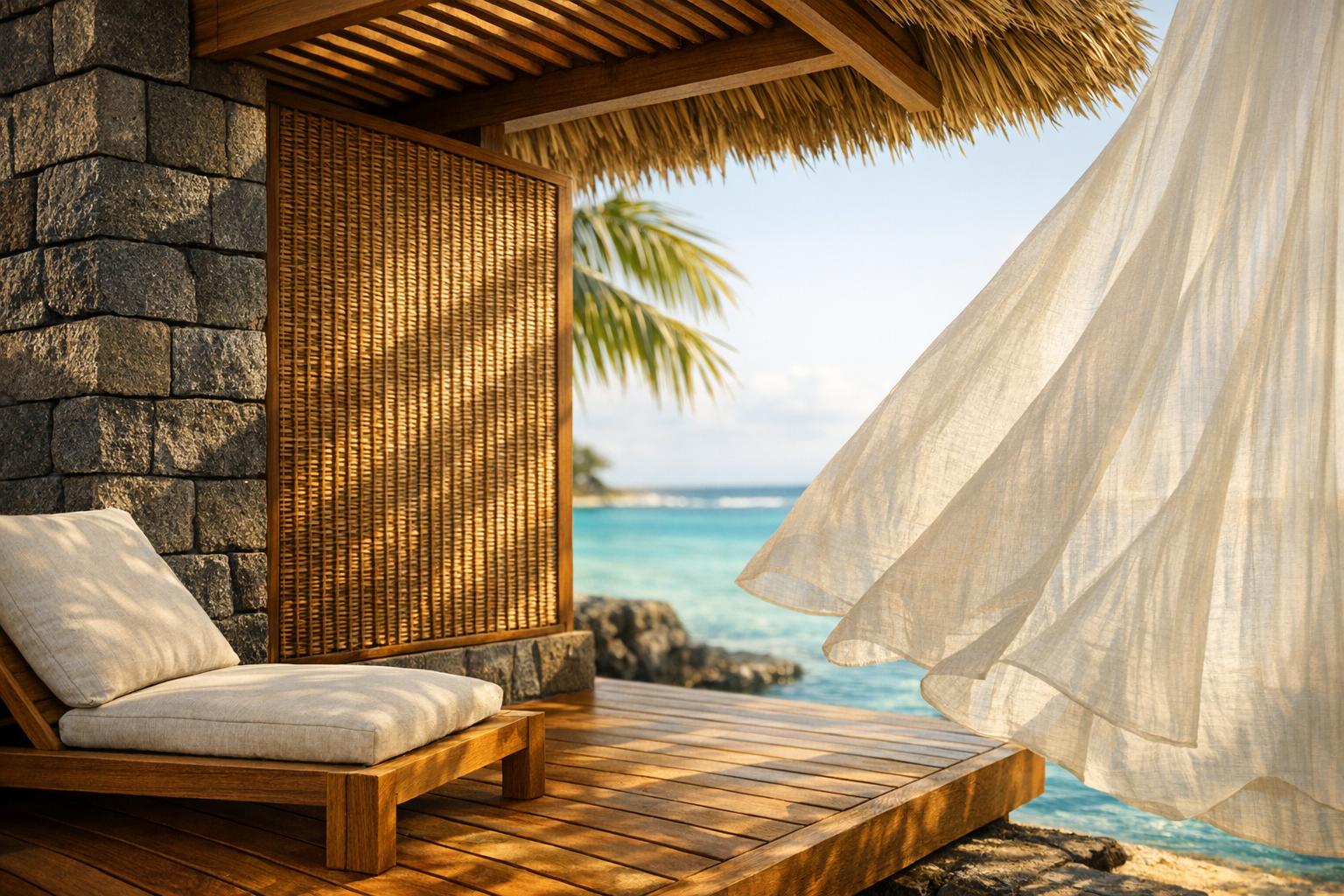
Luxury villas in Mauritius are incorporating natural materials such as volcanic stone, tropical wood, and thatch, responding to a growing demand for sustainable properties. These choices enable energy costs to be reduced by 65% to 75%, while increasing property values by 15% to 25%. In addition to better thermal efficiency, these materials harmonise with the local landscape and promote a bioclimatic approach.
Key points:
- Popular materials: Basalt stone for coolness, exotic woods for their resistance, thatch and vetiver for insulation.
- Advantages: Reduced need for air conditioning by up to 60%, better rental profitability, and accelerated resale by 30%.
- Challenges: Regular maintenance required to prevent moisture, termites, and UV damage.
- Flagship projects: Jiva Santosha and Harmonie Golf & Beach Estate, combining luxury and energy autonomy.
These initiatives show that luxury and respect for the natural environment can coexist, while meeting the expectations of modern buyers.
Main natural materials used in Mauritian villas
Basalt stone and volcanic rock
Basalt stone is a popular choice for facades, walls, and landscaping. Thanks to its high thermal mass, it helps maintain a pleasant indoor temperature, even during hot tropical days. Furthermore, this volcanic rock is extremely weather-resistant, making it a durable material against humidity and prolonged UV exposure.
A remarkable example of basalt stone usage is the Anantara Iko Mauritius Resort project, which incorporated stones salvaged from old buildings. This approach lends a historic charm to the constructions while reducing their carbon footprint. This type of reuse is part of a circular economy approach where luxury and environmental responsibility meet.
Let's now move on to another essential material: wood, which brings warmth and elegance to living spaces.
Tropical woods and bamboo
Tropical woods such as Iroko, Kiaat, and Yellow Balau are particularly appreciated for their natural robustness. These species are ideal for verandas, terraces, and interiors, as they resist humidity and insects well. For example, at Jiva Santosha, the 20 prestigious villas use exotic woods from responsibly managed forests, creating a perfect continuity between indoor and outdoor spaces.
« The exotic wood species selected for the project come from sustainable forests. Wood represents all the strength and beauty of nature. » – Jiva Santosha
Bamboo, meanwhile, is gaining popularity in bioclimatic designs. Used for walls and decorative elements, this fast-growing material nevertheless requires specific treatments against humidity to guarantee its durability. To extend the life of tropical woods, it is advisable to apply fungicides and insecticides before construction, as well as water-repellent coatings with UV protection. These practices strengthen the balance between aesthetics and respect for the environment.
After wood, the natural materials used for roofing also play a key role in villa design.
Thatch and vetiver for roofing
Thatch and vetiver are emblematic materials of Mauritian architecture. They offer excellent thermal insulation, thereby reducing the need for air conditioning.
At the Domaine d'Anbalaba in Baie du Cap, the « Guetali » model combines natural material roofs with open verandas. This configuration promotes cross-ventilation, making air conditioning unnecessary in living areas. For its part, Jiva Santosha highlights vetiver as its primary insulator, symbolising an ecological commitment while contributing to the energy self-sufficiency of the villas.
These traditional materials integrate perfectly into modern designs, enriching architecture while meeting current needs. The 2026 trend, influenced by Balinese style, favours gently sloping roofs covered with thatch, creating a soothing and meditative atmosphere. For example, the spa at Anantara Iko Mauritius Resort is entirely covered with thatched roofs, offering harmony between natural materials and the surrounding vegetation. This demonstrates that luxury and respect for the environment can be successfully combined.
sbb-itb-3115173
Organic Modern Style: Explore the Interior of a Luxury Villa at €20,000,000 🌿✨
Advantages and challenges of natural materials
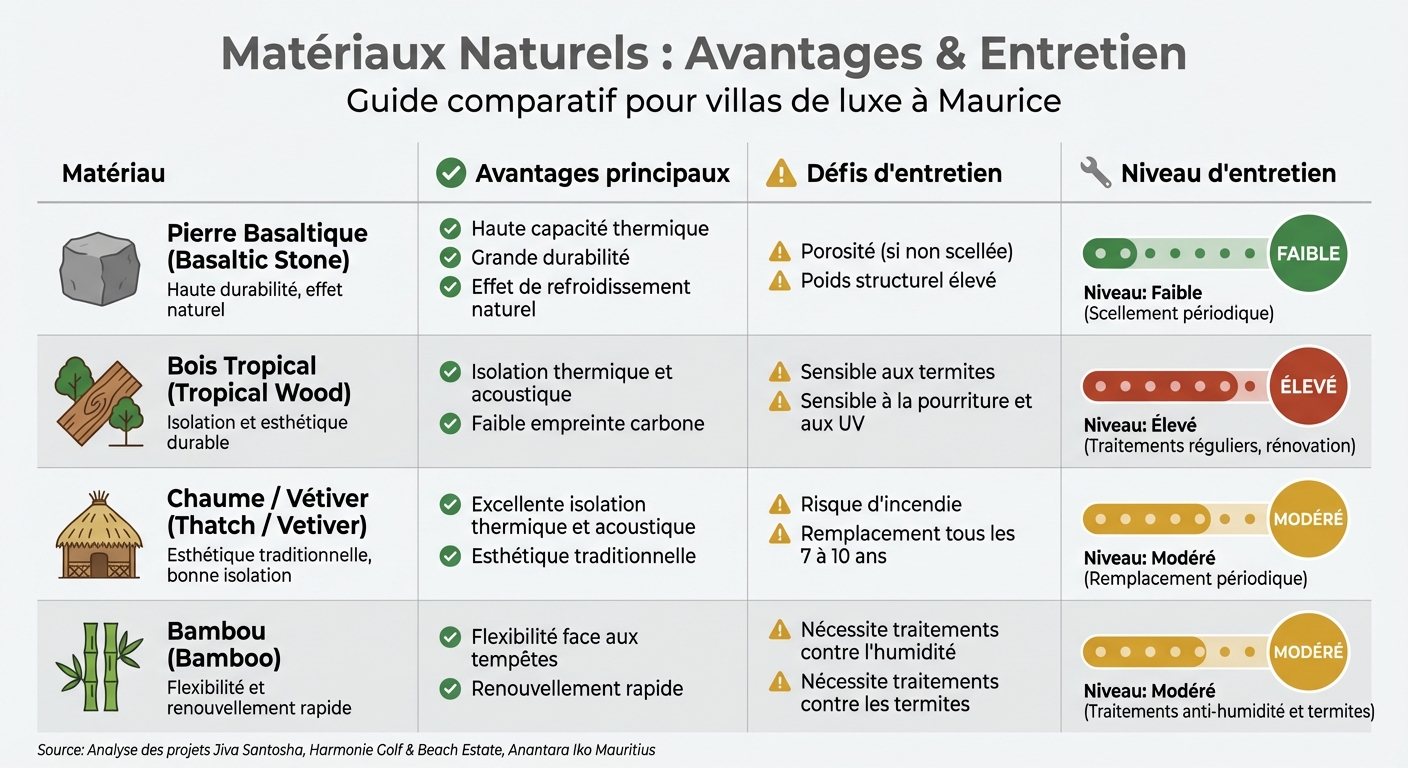
Comparison of natural materials for luxury villas in Mauritius: advantages and maintenance
Aesthetic and functional advantages
In the context of Mauritian bioclimatic architecture, natural materials stand out for their visual charm and energy efficiency. They create a warm and authentic ambiance, in perfect harmony with the island's natural setting. This connection with nature, often described as biophilic, helps to improve the well-being of residents, reducing stress and promoting more restful sleep.
On a practical level, these materials offer astonishing advantages. For example, wood acts as a natural humidity regulator, helping to maintain a pleasant indoor temperature throughout the year. By reducing humidity, it also prevents mould formation and improves indoor air quality.
« The use of wood... guarantees energy efficiency, a healthy living environment, short construction time, and affordable prices. » – Domaine de Plaisance
Another major asset is their ecological impact. In Mauritius, sustainable properties have seen a 35% increase in demand over the past three years. Moreover, eco-luxury villas, which sell for between 15% and 25% more than conventional properties, allow energy costs to be reduced by 65% to 75%.
However, these advantages come with specific challenges that are crucial to consider.
Practical challenges and maintenance requirements
Mauritius' tropical climate poses unique challenges for natural materials. High humidity can cause fungal proliferation, wood degradation, and insect infestations. Furthermore, intense UV rays lead to discolouration, cracking, and deformation of untreated wood.
« The Mauritian climate, with its high humidity, intense sunshine, and occasional cyclones, demands specific techniques to ensure the longevity and resilience of wooden structures. » – MLO Smart Construction
To preserve these materials, regular maintenance is essential. This includes preventive treatments such as the application of fungicides, insecticides, and water-repellent coatings. Even more robust materials, such as basalt stone, require periodic cleaning and sealing to prevent moisture infiltration.
Practical solutions exist to extend the life of structures. For example, elevating wooden constructions on concrete foundations limits their contact with the ground. The use of stainless steel connectors and adequate ventilation also reduce the risks associated with humidity. Bamboo, while appreciated for its flexibility against cyclones, requires specific treatments against termites and humidity.
Comparative table of advantages and disadvantages
Here is a summary of the main advantages and challenges associated with different natural materials:
| Material | Main advantages | Maintenance challenges | Maintenance level |
|---|---|---|---|
| Basalt stone | High thermal capacity; great durability; natural cooling effect | Porosity (if not sealed); high structural weight | Low |
| Tropical wood | Thermal and acoustic insulation; low carbon footprint | Susceptible to termites, rot, and UV damage | High |
| Thatch / Vetiver | Excellent thermal and acoustic insulation; traditional aesthetic | Fire risk; replacement every 7 to 10 years | Moderate |
| Bamboo | Flexibility against storms; rapid renewal | Requires treatments against humidity and termites | Moderate |
While initial costs and maintenance may seem high, these investments often translate into long-term savings and better resale value.
Modern designs using natural materials
Mixed designs with natural and contemporary elements
In Mauritius, modern architecture, often described as « tropical chic », harmoniously blends natural materials with modern, clean lines. A typical example is the integration of volcanic stone walls with large bay windows, which creates a smooth transition between indoor and outdoor spaces. This approach highlights local materials while benefiting from the light and transparency characteristic of contemporary design.
Consider Villa Demera 2 located at Anahita Beau Champ. With its 329 m² and a price of Rs 64,800,000, this residence combines volcanic stone, wood, shingles, and thatch. Its north-south orientation was designed to maximise natural ventilation and lighting. Another striking example is the project Les Dômes d'Albion, realised in 2013 by Bernard Mongelard and Jean-Philippe Brusselmans, offering 20 dome-shaped villas. These homes are equipped with a skylight at the top, allowing natural ventilation and efficient evacuation of hot air, while reducing construction costs by 30% to 40% compared to traditional models.
« The architecture allows for maximum use of natural light. A skylight at the top of the dome was built for this purpose and also allows for natural ventilation and evacuation of hot air. » – The Mauricien
These projects show how natural and modern elements can coexist, paving the way for more environmentally friendly constructions.
Bioclimatic and eco-responsible villa projects
In Mauritius, bioclimatic projects focus on energy efficiency and the integration of sustainable solutions such as renewable energies and passive cooling techniques. For example, Harmonie Golf & Beach Estate was, in 2024, the island's first real estate project to obtain EarthCheck Silver Design certification. Designed by JFA Architects, these villas use materials such as bamboo, local stones, and « Ecoblocks » to limit heat. The result: energy consumption reduced by 30% compared to international EarthCheck standards.
The Domaine d'Anbalaba, in Baie du Cap, offers 14 bioclimatic villas from the « Nomadic » range. The Rivulet model notably stands out for its accessible green roof, which keeps the interior about 3 degrees Celsius cooler than the exterior. These villas, starting from €816,000, eliminate the need for air conditioning in living areas.
The Jiva Santosha project, for its part, consists of 20 luxury villas starting from Rs 60,000,000. These homes feature volcanic rock walls and use vetiver to insulate the roofs. In addition, they aim for near energy and water autonomy thanks to the installation of solar panels with batteries and rainwater harvesting systems, thereby reducing dependence on traditional infrastructure.
Case studies: luxury villas using natural materials
Jiva Santosha
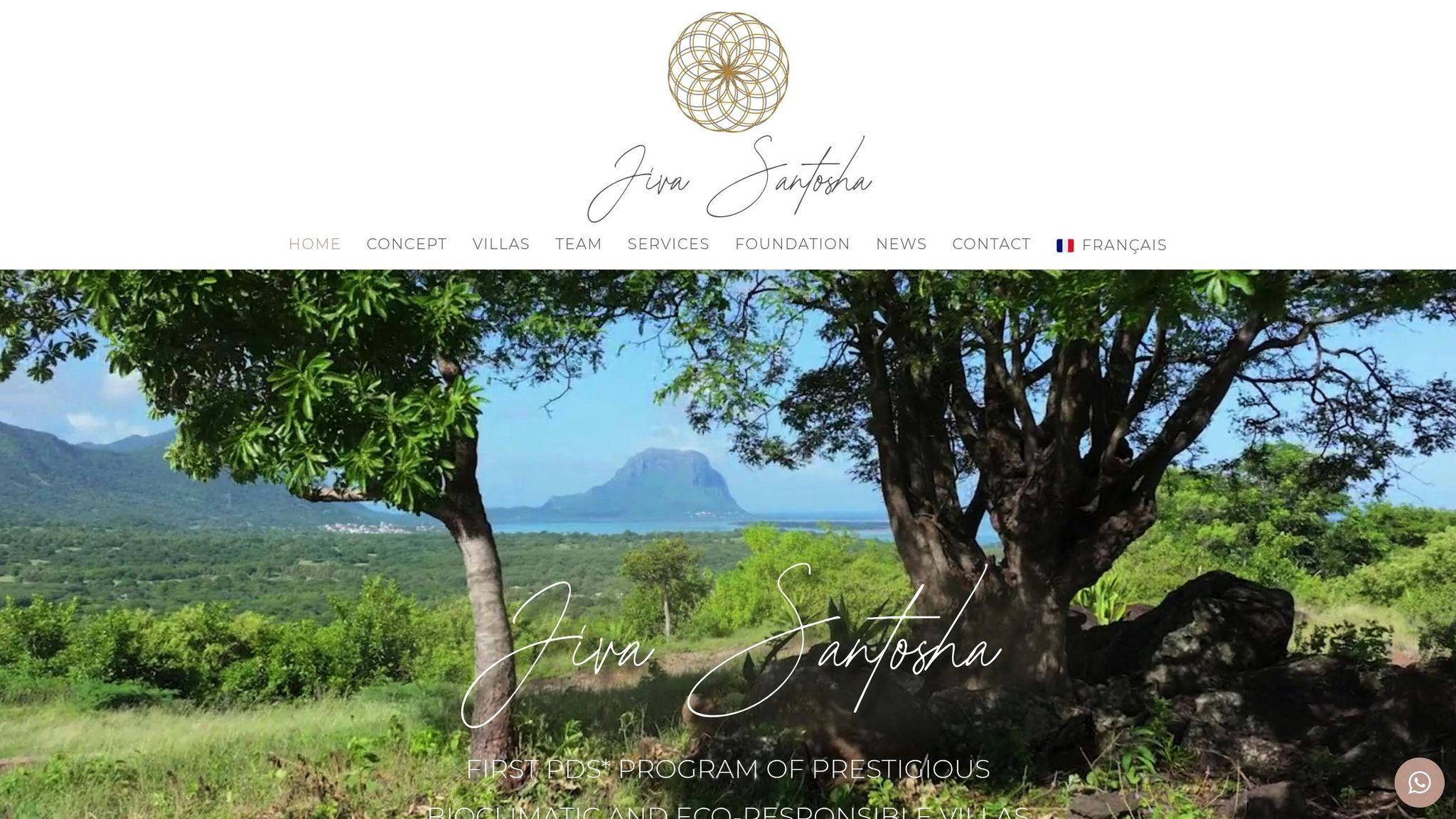
Located atop the Palmyre estate, with breathtaking views of Le Morne Brabant and the lagoon, Jiva Santosha is an ambitious project of 20 prestigious villas, spread over 50,000 m², representing an investment of over €7 million. Prices start at Rs 60,000,000. This project highlights the use of natural materials, such as volcanic rock for facades and durable exotic wood for decorative elements. Local vetiver is used as natural insulation for roofs, thereby reducing air conditioning needs.
« Natural materials such as wood and volcanic rock have been selected to create a harmonious atmosphere with the environment. » – Jiva Santosha
These villas are distinguished by their almost complete autonomy in water and electricity, thanks to rainwater harvesting systems, greywater recycling, and solar panels equipped with batteries. The bioclimatic orientation and the use of bio-based materials are part of a sustainable approach, allowing these materials to be reused at the end of their life cycle. This project perfectly illustrates the balance between luxury and environmental responsibility, a strong characteristic of contemporary architecture in Mauritius.
Let's now move on to another exemplary achievement in the use of natural materials.
Harmonie Golf & Beach Estate
In 2024, Harmonie Golf & Beach Estate became the first Mauritian real estate project to receive EarthCheck Silver Design certification. This innovative project replaces traditional wood with bamboo for all its structures and integrates elements such as natural stone and volcanic rocks into its architecture and landscaping.
« The choice of natural and sustainable building materials was a prerequisite to be fully consistent with the concepts of the project. Bamboo is therefore used for all wooden structures, as well as natural stone. » – Harmonie Golf & Beach Estate
The main innovation lies in the use of « Ecoblocks », combined with hemp insulation under the pitched roofs. This approach reduces energy consumption by 30% compared to international EarthCheck standards. Furthermore, the project values 100% of the existing flora for landscaping and uses 90% endemic plants (Bois noir, Tamarind, Latan palms) to limit irrigation needs. Finally, a 6-hectare wetland area has been restored, reinforcing the project's ecological commitment. This initiative proves that international certification and the use of local resources can be combined.
To conclude, let's discover how Ekô Savannah harmoniously integrates into its environment.
Ekô Savannah
With villas offered from €1,220,000, Ekô Savannah is distinguished by its setting blending wild nature and refinement. This eco-responsible project perfectly integrates with the ochre and caramel tones of the surrounding savannah. The lush gardens surrounding the villas create a true oasis in this natural landscape.
« The refined architecture of this vast private estate subtly merges with the majesty of the panorama... designed as a lush oasis. » – Ekô Savannah
The villas favour a single-level design, with large shaded terraces promoting natural ventilation. Other initiatives include a wastewater micro-treatment system and eco-responsible gardens composed of endemic plants, thereby limiting the project's ecological footprint. In addition, residents benefit from a clubhouse, concierge service, and a business centre, combining comfort and sustainability. This project brilliantly demonstrates how careful integration into the landscape can enhance both the quality and durability of villas in Mauritius.
Conclusion: Natural materials in Mauritian luxury villas
In Mauritius, natural materials are no longer just a matter of style; they now embody modern luxury. Elements such as volcanic stone, bamboo, tropical wood, and thatch provide a natural elegance that perfectly combines contemporary design with an approach respectful of the island's environment. This bioclimatic method also optimises thermal comfort, perfectly suited to the tropical climate.
These choices are not only aesthetic; they also have a financial impact. Eco-luxury villas sell for between 15% and 25% more than conventional constructions, while reducing energy costs by 65% to 75%. Furthermore, they offer a higher rental yield, between 2% and 3% more per year.
« Eco-luxury in Mauritius represents the harmonious marriage of high-end living and ecological mindfulness. » – Tyack Properties
The popularity of these sustainable properties has jumped by 35% over the past three years, proving that natural materials are redefining the standards of high-end real estate in Mauritius.
For buyers interested in a prestigious villa, opting for certified materials (such as EarthCheck, LEED or BREEAM) guarantees not only an exceptional lifestyle but also a sustainable appreciation of their investment. Soléa Realty helps investors find properties that meet these standards, thus offering a modern and responsible solution for luxury in Mauritius.
FAQs
Which natural materials are the most sustainable in Mauritius?
In Mauritius, some of the most popular natural materials for their durability include wood and natural stone. Wood, frequently used in bioclimatic constructions, is particularly sought after for its ability to adapt to the tropical climate while offering a warm aesthetic. Natural stone, such as granite and limestone, is also highly prized. These materials stand out for their solidity and their ability to harmoniously integrate into the local landscape, while resisting the island's climatic conditions.
What maintenance is needed against humidity and termites?
To avoid problems related to humidity, opt for effective waterproofing solutions, such as membranes or waterproofing products, to protect your structures from water infiltration. Regarding termites, it is crucial to use appropriate preventive and curative treatments, especially in Mauritius' hot and humid climate. These precautions help protect your natural materials while increasing their longevity.
How to check if a villa is truly eco-responsible (labels)?
To determine if a villa is environmentally friendly, start by examining its eco-labels or certifications. Recognised certifications like LEED or ISO 50001 attest to high performance in terms of energy and environmental impact.
Next, check the materials used: prioritise villas built with sustainable and renewable materials. A bioclimatic design, which optimises the use of natural resources such as light and ventilation, is also a good indicator. Finally, inquire about the practices adopted, such as responsible waste management or the use of renewable energies. These elements reflect a concrete commitment to the environment.